
AI Usage measurement is here!



Great news... today we launch a fantastic new feature in our Carbon Calculator: AI Usage Measurement!
Something many calculator users have been requesting for the past few months, this is the 11th production-related activity area the industry can now measure, complementing the existing areas: People Transport, Catering, Shooting Spaces, Art Dept and so on.
Designed to help production teams measure the carbon impact of generative AI tools used when creating content, this new addition enables users to quantify emissions from text, image, and video.
Why measuring AI Usage matters
Gen-AI has transformed creative processes for many, but its environmental footprint has been largely unknown, despite a large interest in understanding the impact.
This new feature will ensure creative teams and clients alike can understand the opportunities and implications of gen-AI within the wider production context: for example, where using AI may negate taking a flight. By integrating AI Usage into both Early Insights and Final Footprints, the AdGreen carbon calculator provides the ability to compare different production strategies prior to beginning production, and to record actual AI use once the job is wrapped.
“At AdGreen, we’re committed to giving the industry the tools it needs to make informed, sustainable decisions. The evolution of the carbon calculator to include AI Usage measurement, developed in collaboration with Hiili, brings transparency to the carbon impact of generative AI in advertising workflows. By integrating this into our Carbon Calculator, we empower teams to understand AI’s impact in the context of their wider production activities, and balance innovation with environmental responsibility.”
Jo Fenn, Global Director
The science behind the feature
This new addition has been developed in partnership with Hiili, a carbon data platform renowned for its peer-reviewed, scientifically validated methodology for quantifying emissions from digital activities. Originating as a research spin-off from Universidad Carlos III de Madrid in 2024, Hiili integrates large-scale internet measurement techniques with machine learning models to derive high-precision estimates of energy consumption and associated carbon emissions for digital advertising and AI workloads.
“This partnership enables creative decisions to be made with environmental awareness. For the first time, the use of AI is no longer opaque, becoming integrated into production planning as a strategic element based on scientific accurate Technology.”
Hilli’s Co-founder & CTO, Angel Cuevas
Hiili’s technology is widely recognized for establishing new benchmarks in measurement accuracy and sustainability reporting and has been highlighted in leading global publications. If you would like to further understand their work, you can read their research paper here.
The AI measurement itself converts the electricity (kWh) required for each inference (response) relative to the response type (text / image / video) and the model used, and it’s data centre location into co2e. You can find information about the benchmarks and assumptions used in the calculation of co2e from AI usage here.
Note that the co2e does not include kWh used in the initial training of the AI model, any storage by the AI model of text, image or videos generated (so that the user can refer to them at a later date from within the AI model interface), or any water use associated with cooling data centres. More information why these items are not included can be found in the methodology FAQ.
How it works
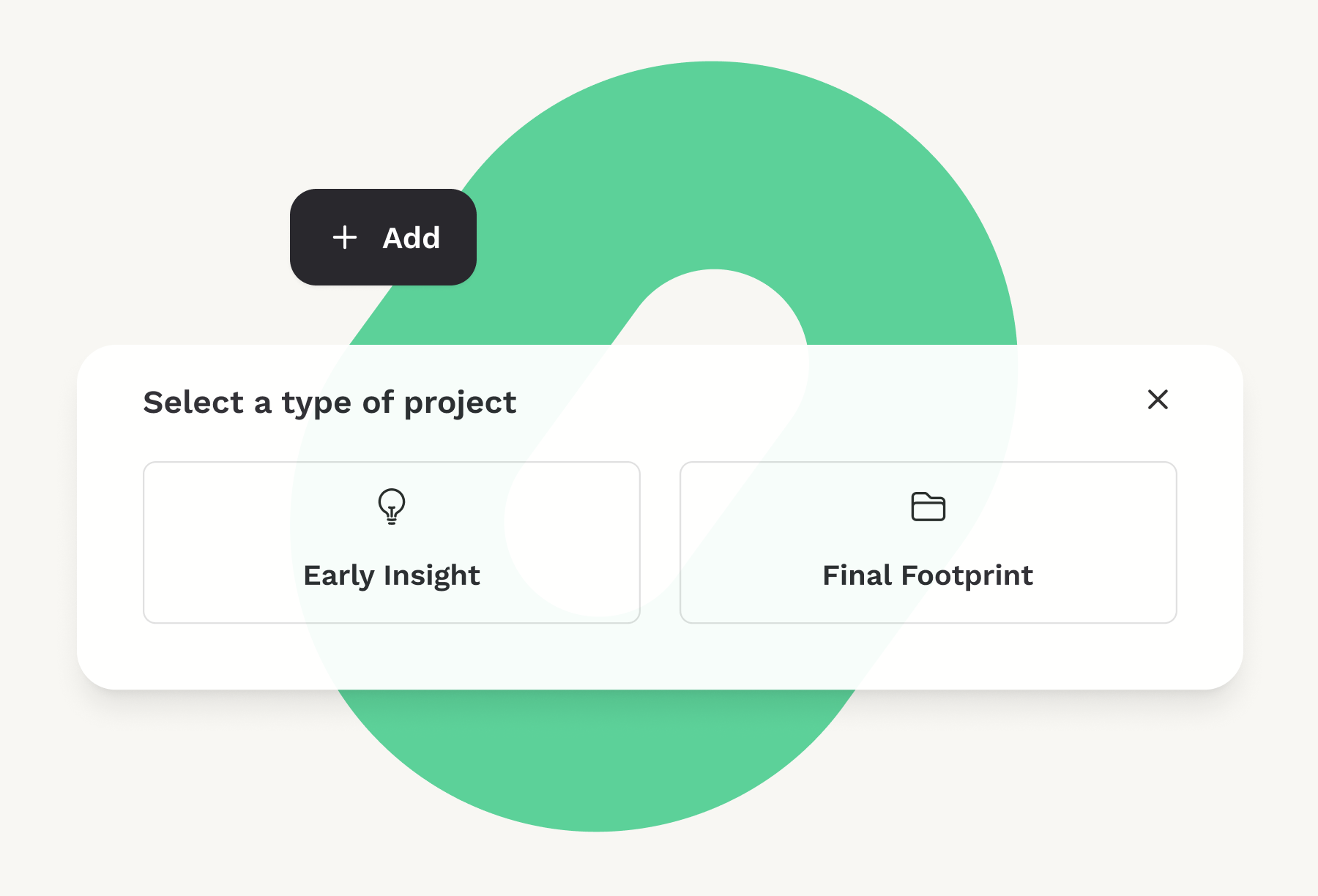
Final Footprints
Designed to be completed when more specific information is available to the production team (i.e. once the project has wrapped), Final Footprints allow the user to record individual AI entries for text, image and video generation. Users will need to provide the country where the AI use took place (which is used in the event of the selected model not having disclosed their data centre location, or where there are multiple), the model - from a drop down list of most popular models, how many responses were generated, and in the case of text and video, the length of the responses.
Given this is the first time production teams are likely to have been asked to gather this type of information, various help prompts have been included to help users understand the details required – particularly when it comes to number of responses generated.
Early Insights
For Early Insights, designed to be used before production begins, the information required from the user is kept to a minimum, simply how many text, image and video responses they expect to generate on their upcoming or potential production.
The models they might use are assumed based on current market share, and the model’s georgaphical data centre locations are based on reported location information in the first instance, combined with where the user has indicated the pre- and post- production will take place, as needed. Text response and video response length are also assumed based on insight from Hiili.
The UI of both features, and the assumptions used are designed to balance the requirements of the user in terms of information gathering, and accuracy of the CO2e result.
In both cases, the information entered by the user is sent to Hiili via API and the equivalent amount of CO2e is sent back and added to the footprint.
AI Use in Context
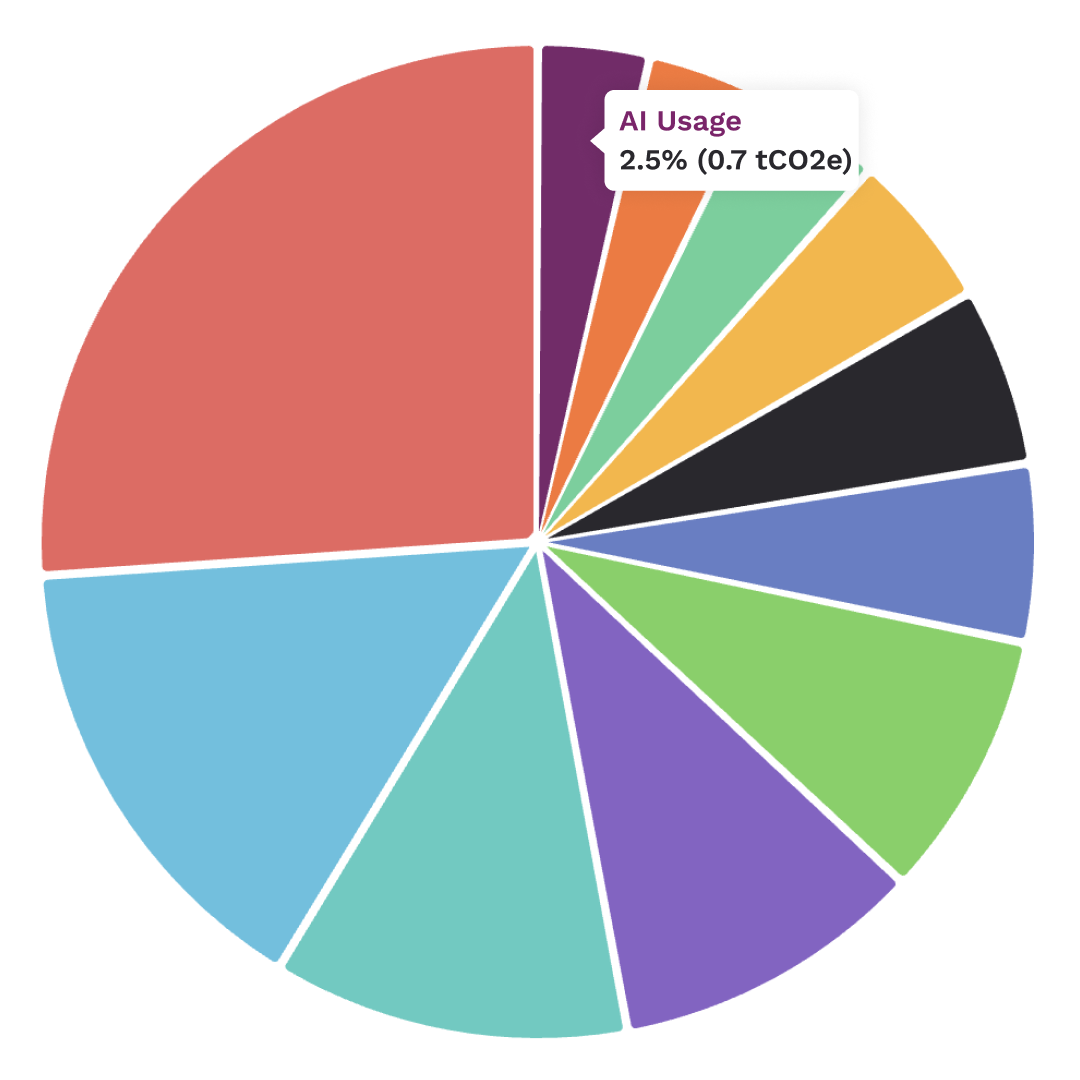
To give some real-world examples of CO2e outputs from the new AI Usage measurement feature, we worked with Novai to measure a soon-to-be released piece of content for Terre di Santivo, who produce artisanal olive oil. The brand, an SME who would not have the budget to produce in-camera content, turned to Novai to create the 40” piece.
Once completed, AdGreen’s Tom O’Brien worked with Novai’s CPO and Co-Founder, Yuri Boiko, to gather the information around the number of text, images and videos generated using AI tools, and created a footprint combining this with work space use, and data storage.
“It’s great to be able to showcase an example of the work we do and share its carbon impact. Gen-AI is a powerful tool which opens creative routes to those brands who might not have had the opportunity to produce content in the past – and gives more established advertisers opportunities for efficiency when it comes to versioning. The fact that its low carbon compared to traditional production methods gives advertisers another factor to consider when thinking about how to approach their next ad.”
Darren Khan, Novai’s CEO and Co-Founder
For comparison, the AdGreen team also created a footprint for what an in-camera execution might look like with a small, branded content team of 4.
Upcoming Webinar
To help users understand and implement this new functionality, we’ll be hosting a webinar on Thursday 4th December 2025 at 3:00 PM GMT (7:00 AM PST, 10:00 AM EST, 4:00 PM CET)
Registration link: https://meet.zoho.eu/bugk-jcz-kwz
The session will cover practical guidance on measuring AI-related emissions, demonstrate the new feature, and include a Q&A with experts from AdGreen, Novai and Hiili. During the hour, we will also unveil the footprints for the AI generated content, and the alternative in-camera example.
We hope to see as many of you on the webinar as possible, and please login and let us know what you think of the new feature!
About Hiili
Hiili is the world’s first scientifically validated carbon measurement platform for digital services, including advertising and AI. Founded in 2024, Hiili leverages cutting-edge research and technology to help organisations accurately quantify and optimise their digital carbon footprint while also improving their business KPIs.
Update April 2026: Hiili have rebranded to GreenBrain Science. Find them here: https://greenbrainscience.com.